
Last updated November 23, 2026
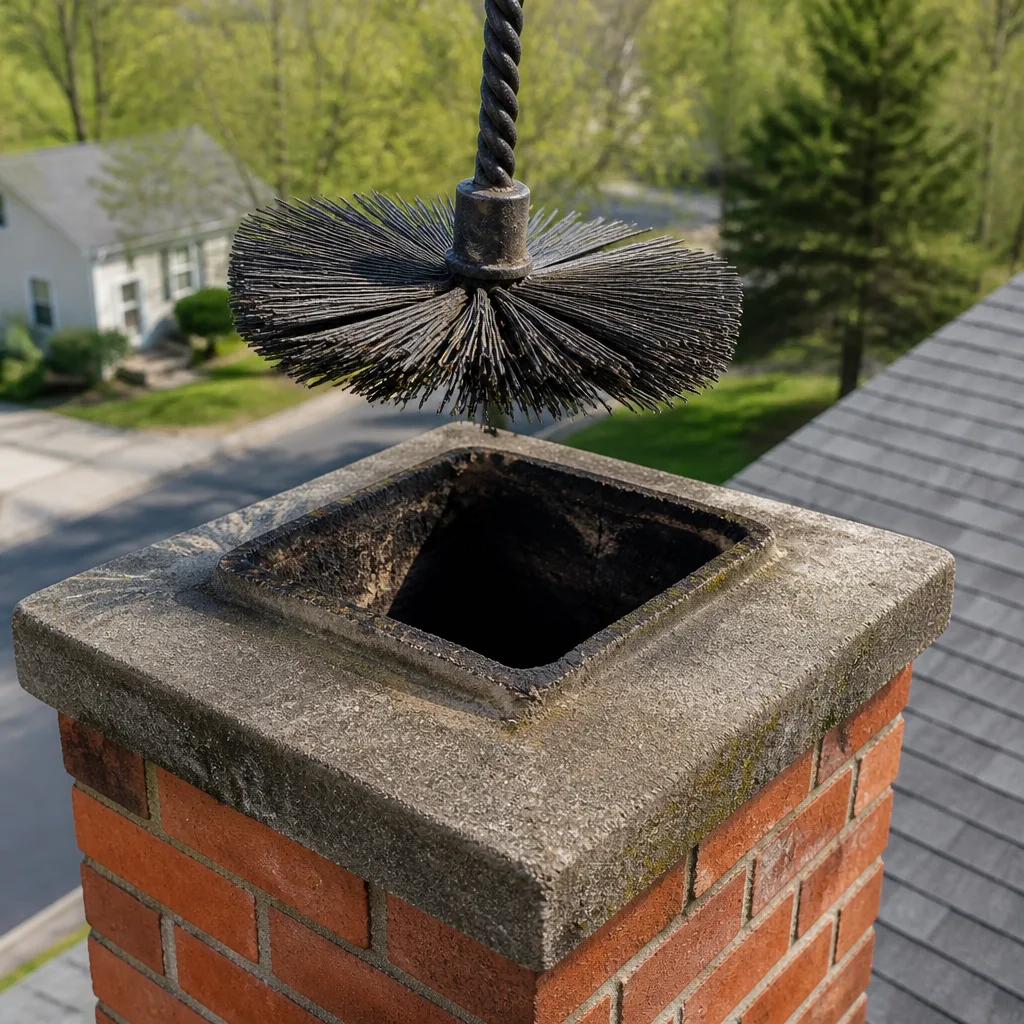 Sweep & inspection
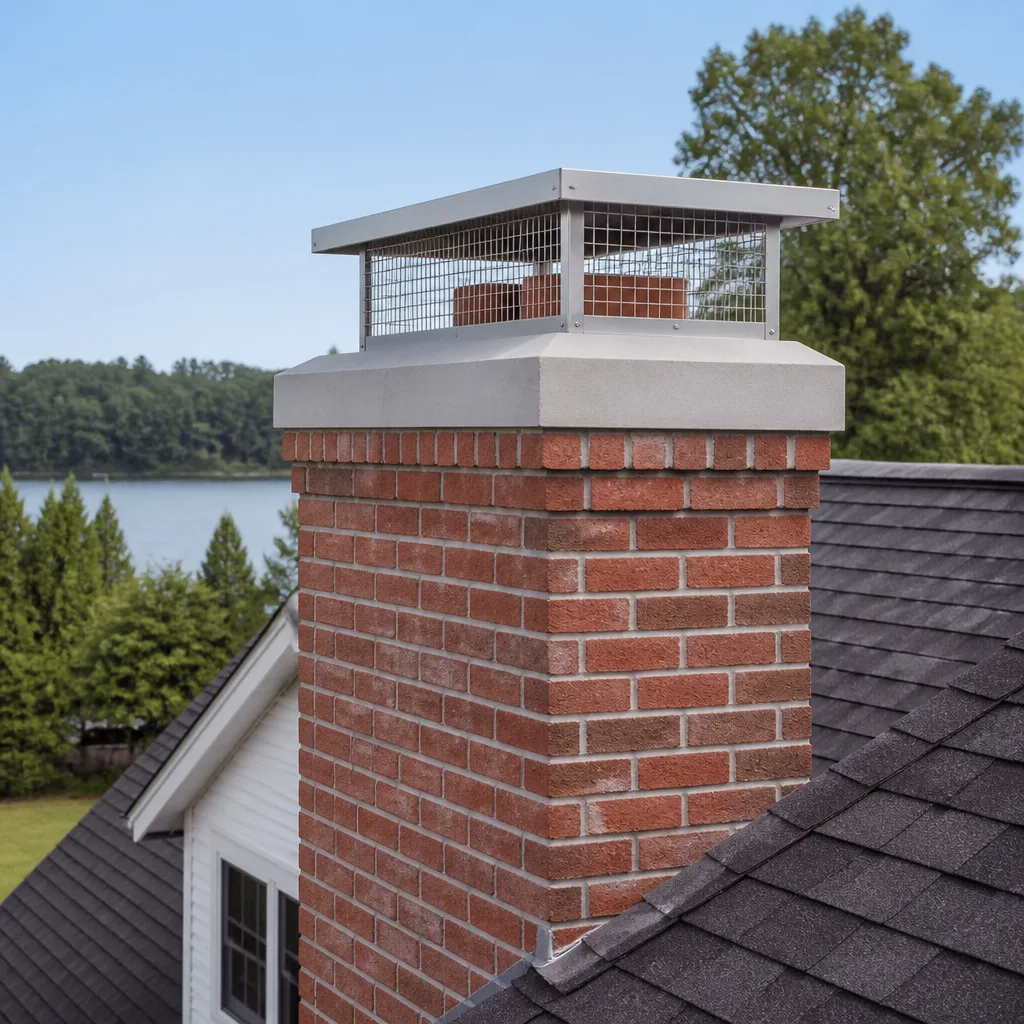 Caps & crowns
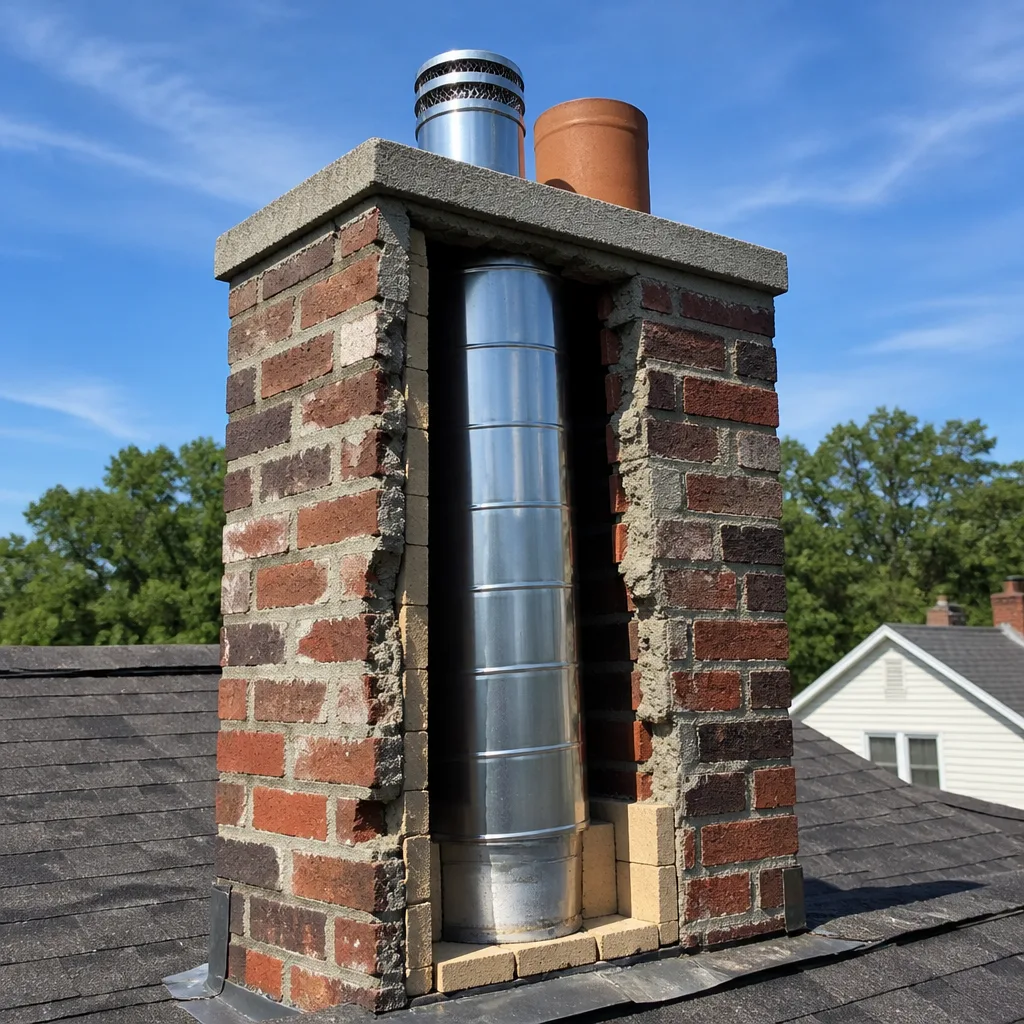 Flue relining
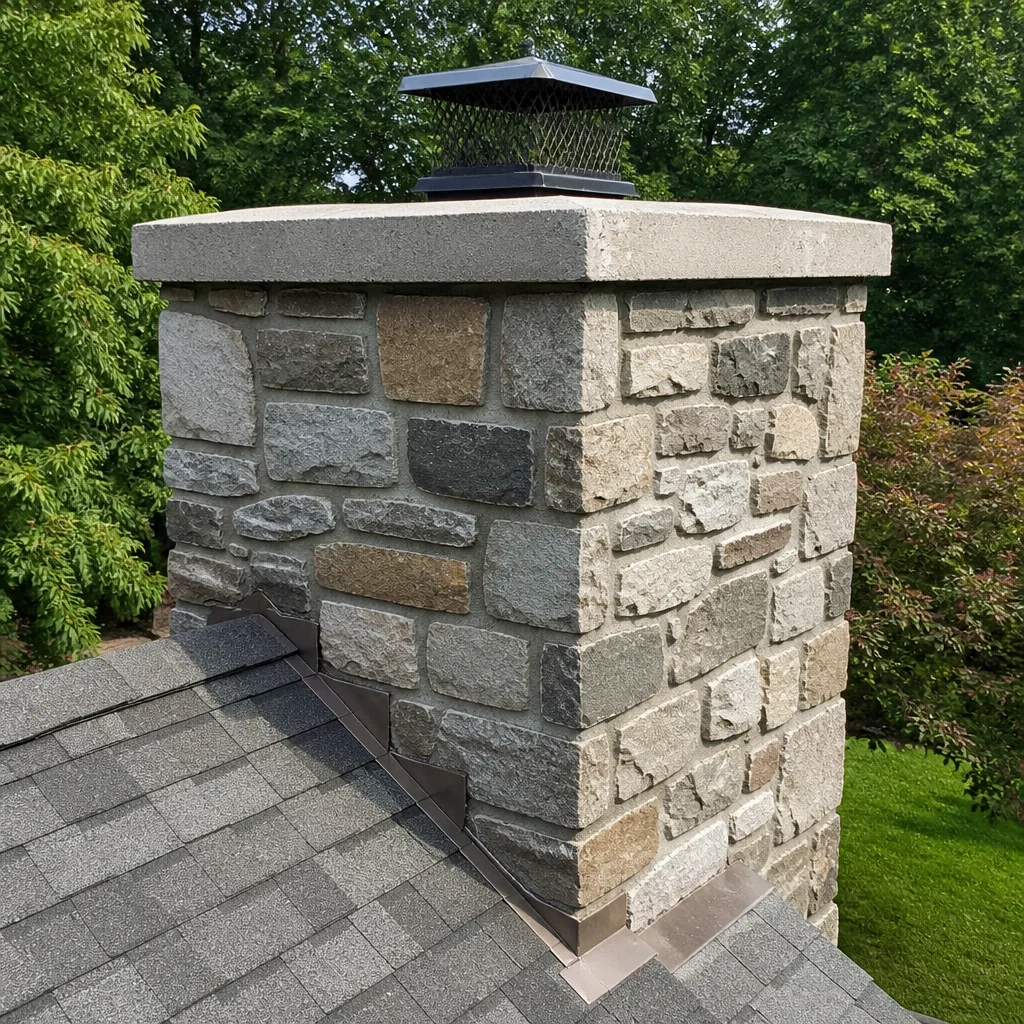 Masonry repair
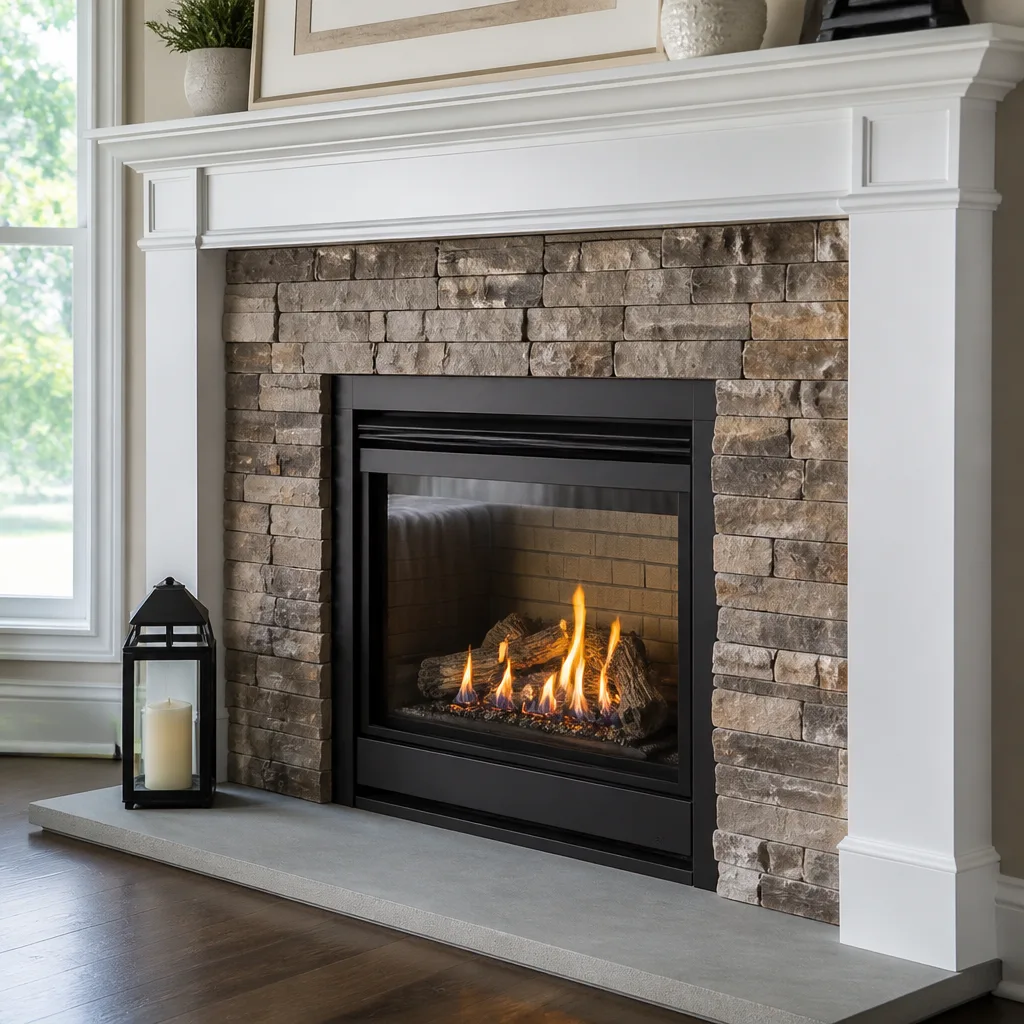 Gas fireplace service
Level 1 sweep and inspection to the NFPA 211 annual standard - flue, crown, cap, and flashing checked and photographed
Chimney sweep logs do not sweep chimneys. They loosen some creosote - which then falls where a brush and vacuum still have to collect it.
Chimney Sweep Maintenance Checklist for Murphy Creek Homeowners
The most common chimney problem we find during inspections isn’t creosote. It’s cap and crown damage that a homeowner could have spotted from the ground with a pair of binoculars months earlier. That gap between what’s visible from the driveway and what gets checked is where small cracks turn into water damage, rusted dampers, and flue tiles that spall after a few freeze-thaw cycles. Murphy Creek sits on the high plains east of Denver, where wind, hail, and sharp temperature swings work on masonry all year. This guide gives you a maintenance checklist you can actually perform: specific visual and functional tests you can do yourself, seasonal tasks broken into fall, mid-winter, and spring, plus a clear handoff point where a certified sweep should take over.
Quick Answer
A chimney maintenance checklist is a set of seasonal inspections, cleanings, and repairs tied to observable conditions on your chimney: the cap, crown, flue, firebox, and exterior masonry. In Murphy Creek, the core items are a ground-level visual check each fall, a professional sweep and inspection based on how much you burn, mid-winter checks on the cap and damper, and a spring review after the heating season ends. Document what you find and when, because an undocumented chimney becomes an insurance problem if a flue fire ever happens.
Styles & brands we work with
- Sweep & inspection
- Caps & crowns
- Flue relining
- Masonry repair
- Gas fireplace service
Table of Contents
- The Ground-Level Visual Inspection Protocol (No Ladder Required)
- Indicators Inside the Firebox That Signal Liner or Smoke Chamber Trouble
- Fall Prep: The Pre-Season Checklist
- Mid-Winter Checks: What to Watch While You’re Burning
- Spring Post-Season Review: After the Last Fire
- What to Document (And Why Your Insurer Cares)
- When to Call a Professional
- Frequently Asked Questions
The Ground-Level Visual Inspection Protocol (No Ladder Required)
You don’t need to climb anything to catch the majority of chimney problems early. A pair of binoculars, a flashlight, and fifteen minutes from your own yard will show you a surprising amount. We tell Murphy Creek homeowners to do this walk-around once in early fall before the first fire and once again after the last one in spring. Stand back far enough to see the full chimney profile, then work your way down.
- Look at the crown first. The crown is the sloped concrete or mortar cap at the very top of the chimney that sheds water away from the flue. From the ground, it should look like a solid, angled surface. Cracks wider than a hairline, crumbling edges, or any visible gap where it meets the flue are the number one sign water is getting in.
- Check the cap and spark screen. The cap sits above the crown and keeps rain, birds, and debris out of the flue. A cap that’s tilted, rusted through, or missing its screen has stopped doing its job. Bird nests and debris are common in Murphy Creek because the open prairie around the neighborhood gives birds and squirrels plenty of wind to ride into an uncapped flue.
- Scan the exterior masonry for spalling and efflorescence. Spalling is where the face of a brick flakes off, leaving a pitted, crumbling surface. Efflorescence is the white, chalky stain that means water is moving through the masonry and leaving mineral deposits behind. Both point to a moisture problem that will get worse, not better.
- Trace the flashing where the chimney meets the roof. Look for lifted, rusted, or missing metal and cracked sealant. Flashing failures are a top cause of roof leaks that homeowners blame on the roof itself.
- Look for mortar joint erosion. The joints between bricks should be full and firm. Recessed, sandy, or missing mortar means repointing is on the horizon.
Write down what you see and photograph it. When you do hand off to a professional, those photos tell us exactly where to start. Cap and crown work is a core part of what we handle, so if your walk-around turns up a cracked crown or a rusted cap, that’s the kind of repair we’d confirm and quote on-site.
Indicators Inside the Firebox That Signal Liner or Smoke Chamber Trouble
Bring a bright flashlight and shine it up inside the firebox and as far up the flue as you can see. You’re looking for damage to the liner and the smoke chamber, the sloped section just above the damper that funnels smoke into the flue. These are the areas where problems get expensive if they’re missed, and they’re also where a homeowner can spot trouble before calling anyone.
- Damper problems. The damper should open, close, and seat fully. A damper that’s stuck open, rusted shut, or doesn’t sit flush lets heat escape up the flue or smoke spill into the room.
- Cracked or missing flue tiles. If you can see the flue tiles from below, look for vertical cracks, gaps between tiles, or pieces that have spalled off. Cracks in a clay tile liner are how combustion gases and heat reach the framing and masonry around the flue.
- Glazed, shiny creosote. Creosote builds up in stages. The early stage is soot and flaky ash, which sweeps out easily. The later stage is a hard, shiny, glazed coating that needs mechanical removal. Glazed creosote is what fuels a flue fire.
- White or grey staining on the smoke chamber. Streaks or a chalky residue on the smoke chamber walls can mean moisture or a failing liner behind the masonry.
- Crumbling mortar or loose brick inside the firebox. The firebox takes the most direct heat of any part of the system. Recessed mortar joints and loose firebrick here signal that heat has been working on the assembly.
What you can’t see from inside is the condition of the smoke chamber’s parging and the liner above it. That’s where a camera inspection earns its keep. When a flue liner is spalled but structurally intact, our team can sometimes restore it with HeatShield ceramic flue restoration rather than replacing the entire liner, which is one of the more useful options a sweep can offer. When full replacement is the right call, we install DuraFlex flexible liner systems sized to the appliance.
Fall Prep: The Pre-Season Checklist
Fall is when you set the chimney up to burn safely through the season. In Murphy Creek, the first cold snap can arrive fast, and the last thing you want is to discover a problem the night you want a fire. Work through these items before you light the first fire of the year.
- Clear the firebox of last season’s ash. Leave about an inch of ash as a bed, but remove the rest. Excess ash restricts airflow and can smother a fire.
- Test the damper. Open and close it fully. Listen for scraping and confirm it seats.
- Do the ground-level visual protocol described above, with binoculars.
- Inspect the cap and screen for damage or nesting. If anything is loose, that’s a repair before the season, not after.
- Check the door gasket on fireplace doors or a wood stove. A gasket that doesn’t seal lets the fire run uncontrolled and can drive smoke into the room.
- Book a professional sweep and inspection if you burned last season and haven’t had the flue cleaned. Creosote accumulates every season you burn, and how fast depends on your fuel and how hot you run the fire.
- Confirm you have working smoke and carbon monoxide detectors on each level and outside sleeping areas. A chimney check complements those detectors; it doesn’t replace them.
If your walk-around or your sweep turns up cracks in the firebox or a rusted damper, that’s a job for fireplace repair, and it should happen before you burn again. Getting the whole system looked at once, rather than one piece at a time, is why we handle the sweep, the inspection, the repair, and the cap work as a single visit whenever the scope allows.
Mid-Winter Checks: What to Watch While You’re Burning
The chimney doesn’t stop changing once the season starts. Snow, ice, and the freeze-thaw cycle that’s normal on the Colorado plains work on masonry between fires, and how you burn changes what builds up inside the flue. A few quick checks through the winter catch problems while they’re still small.
- Watch for smoke rolling back into the room. Smoke that spills into the room when you start a fire, or that doesn’t clear once the flue warms, points to a blockage, a damper problem, or a liner issue. Stop burning and have it looked at.
- Listen for a low rumble or roaring sound. That’s the sound of a flue fire. If you hear it, get everyone out, call 911, and don’t use the chimney again until it’s been inspected.
- Check the cap after wind and snow storms. Murphy Creek gets strong wind and hail. A storm can loosen a cap, drop debris, or crack a crown. A quick binocular check after a big storm is worth the two minutes.
- Watch the fire’s behavior. A fire that’s suddenly hard to start, burns unevenly, or produces more smoke than usual is telling you airflow has changed.
- Keep an eye on the exterior for new staining. Fresh efflorescence or dark streaks on the masonry in mid-winter mean water is getting in somewhere, usually at the crown or flashing.
- Burn dry, seasoned wood. Wet wood produces more creosote and less heat. The fuel you choose is one of the biggest variables in how fast the flue fouls.
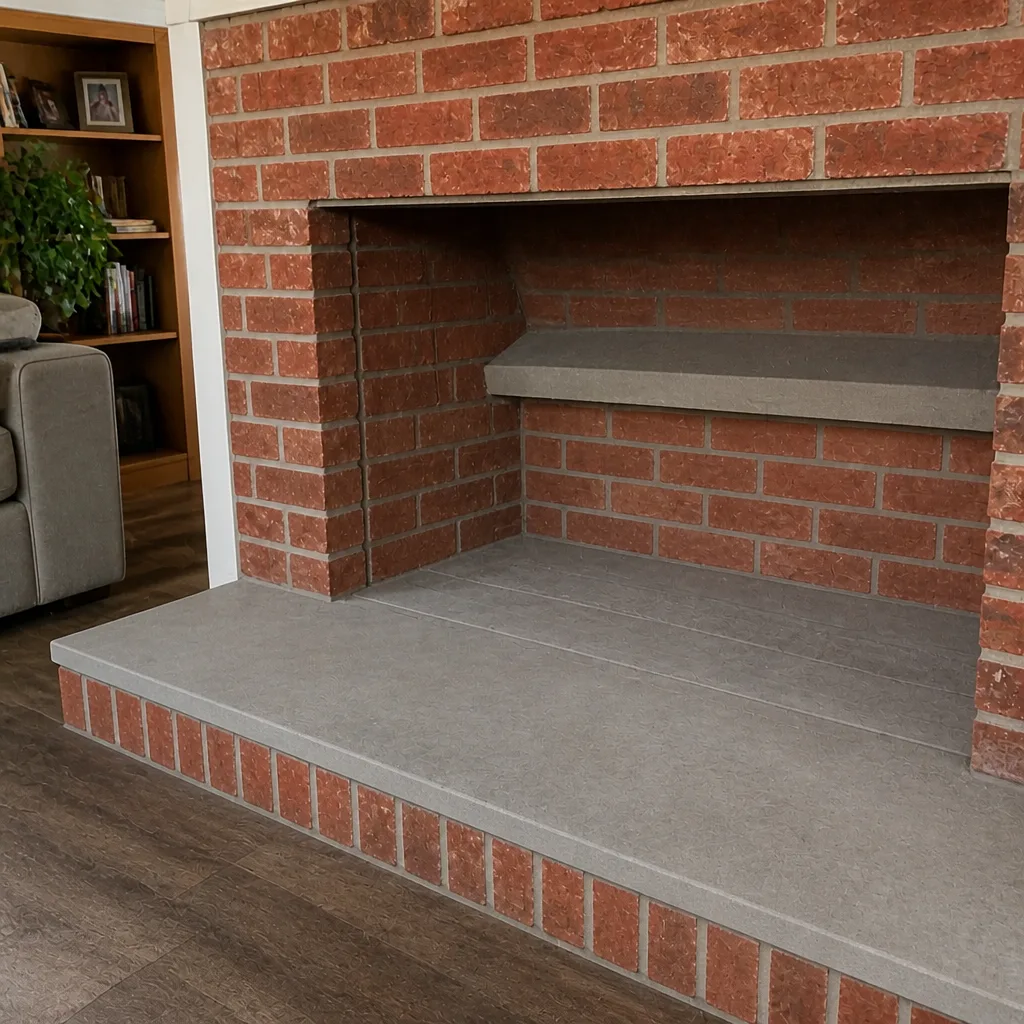
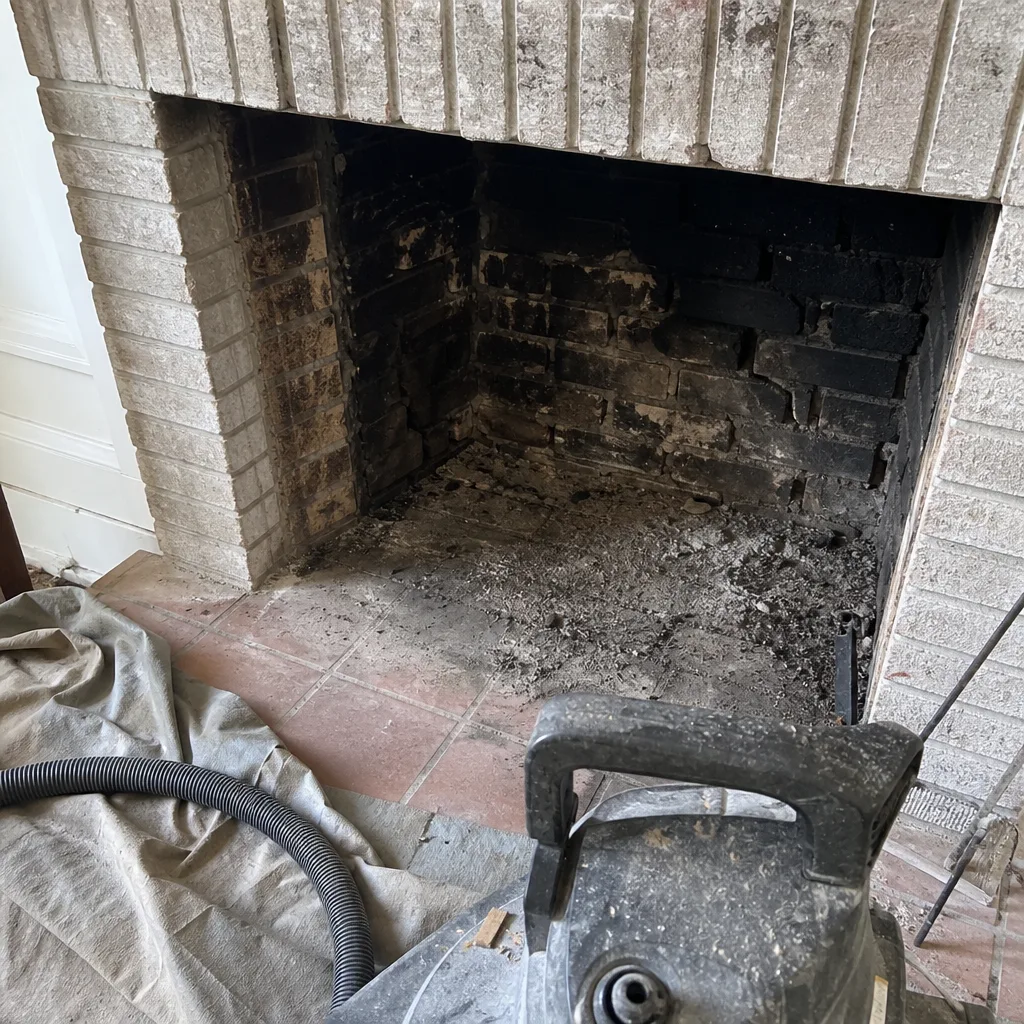
See the difference
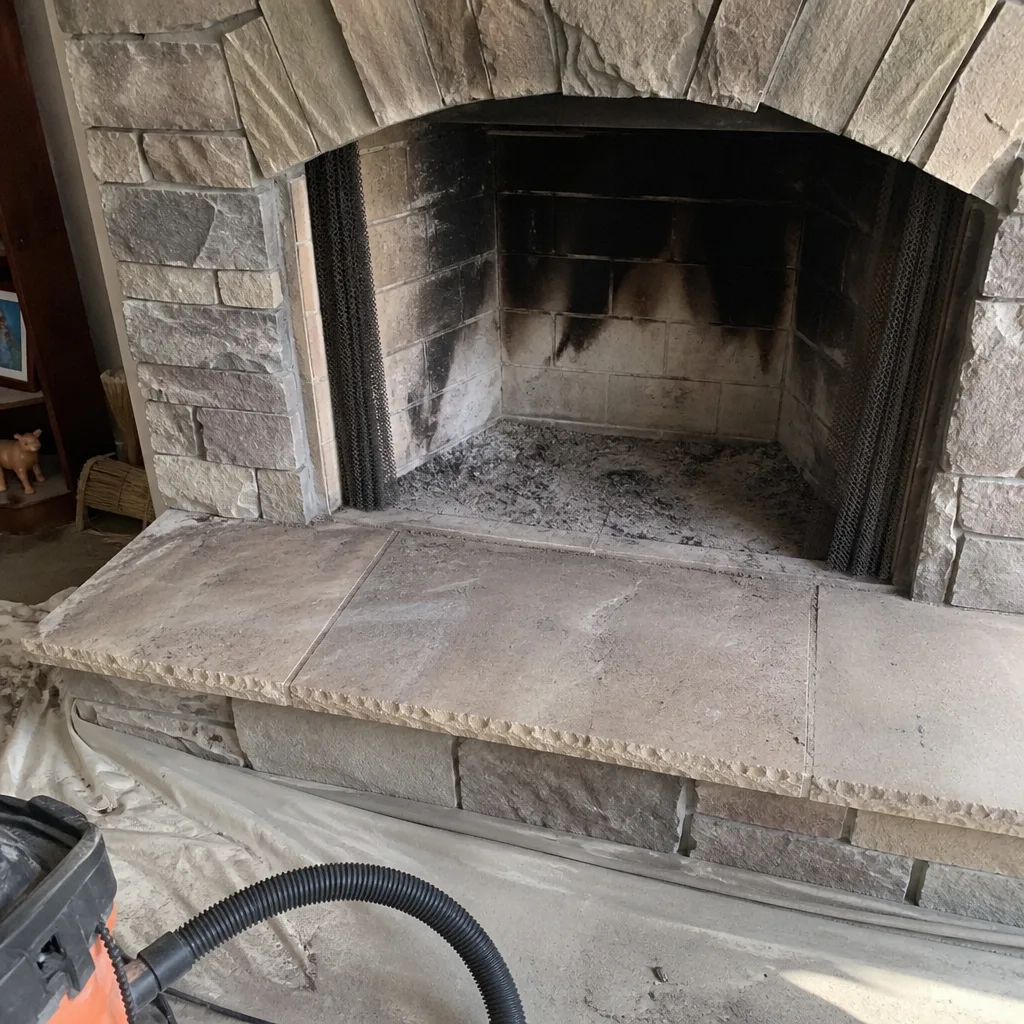 Before
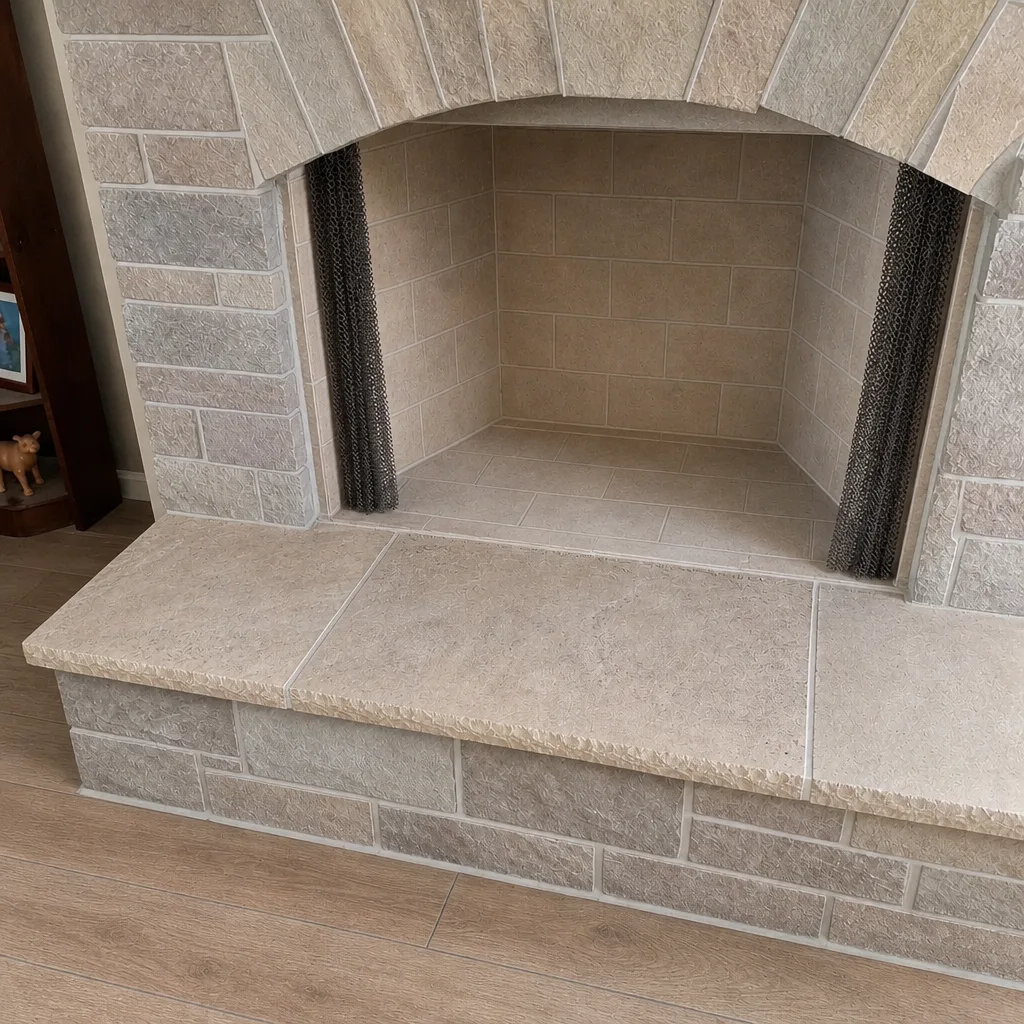 After
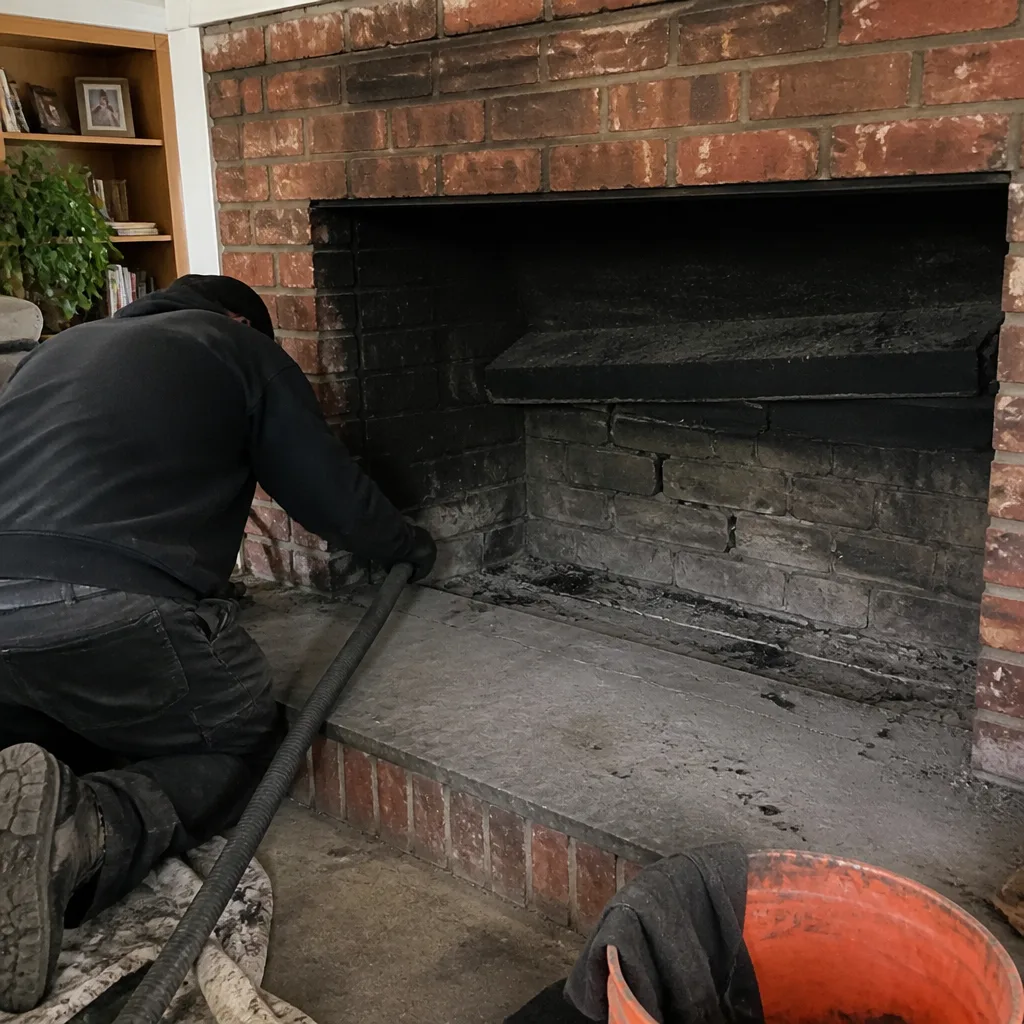 Before
 After
 Before
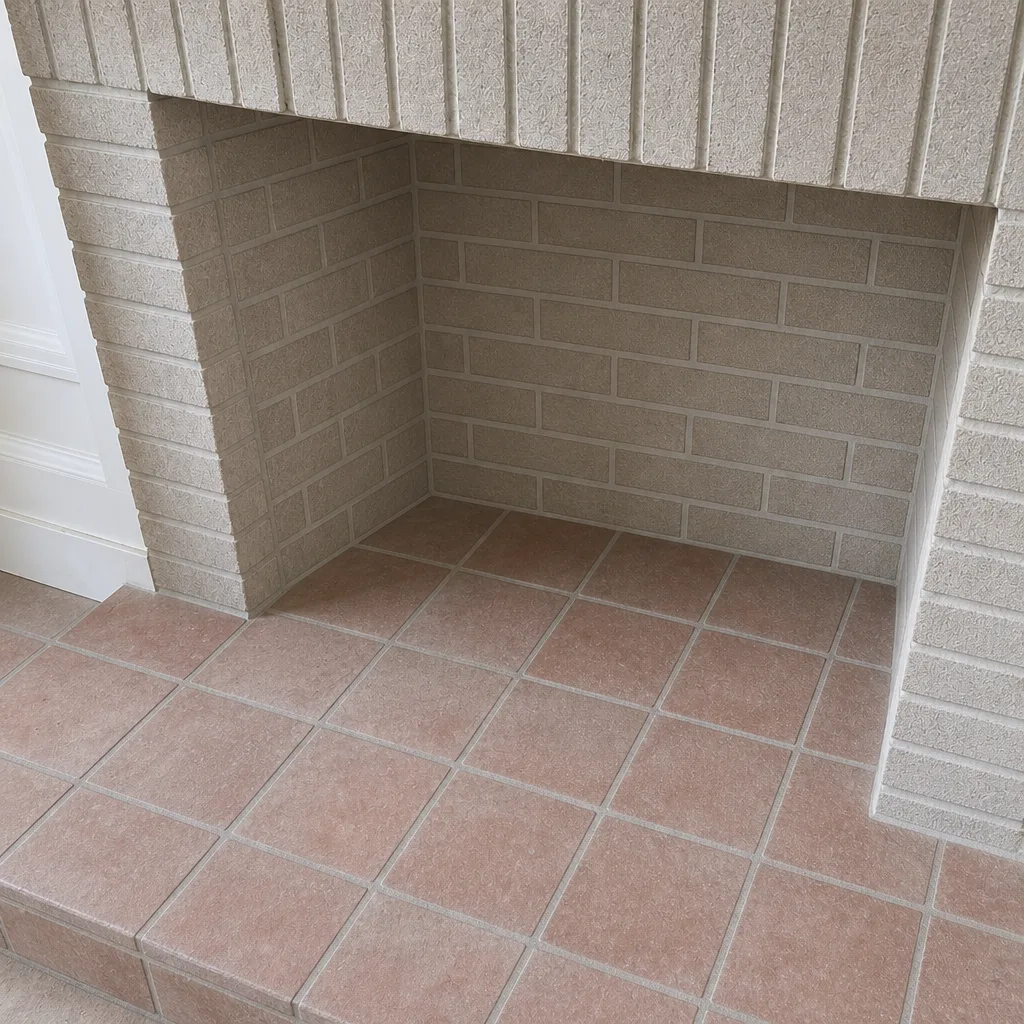 After
Spring Post-Season Review: After the Last Fire
Spring is the best time to get ahead of chimney problems because you have months before you need the chimney again. The weather is milder, so repairs and liner work are easier to schedule, and any damage from the winter is fresh and easy to spot. Do the walk-around one more time once the snow is gone, then compare it to your fall photos.
- Repeat the ground-level visual protocol and compare against your fall photos. New cracks or stains are your priority list.
- Clean out the firebox and ash dump completely for the off-season.
- Have the chimney swept if you burned through the season. Even a light burning year leaves creosote, and a spring sweep means the flue sits clean all summer instead of holding corrosive residue through the humid months.
- Schedule any repairs now rather than waiting until fall. Crown repair, cap replacement, and repointing are all easier to plan in spring.
- Check the cap and crown for winter damage and get them fixed before the summer storm season. Hail and wind are hard on a compromised crown.
- Note what you burned and how much. Cord count, fuel type, and burn frequency all inform how soon you need the next sweep.
Spring is also when we like to handle chimney cap & crown work, because a new cap and a sealed crown protect the masonry through the storm season instead of waiting until the first freeze. A crown that’s left cracked all summer lets water in with every rain, and the damage compounds.
What to Document (And Why Your Insurer Cares)
A chimney maintenance record is only useful if it’s specific. A folder of receipts with no dates or descriptions doesn’t tell an adjuster or a future buyer anything. What you want is a simple log you can add to in a couple of minutes after each check or service visit. Keep it digital so it’s backed up, and photograph as you go.
- Service dates and what was done. The date of each sweep, inspection, and repair, plus the name of the company and what they found.
- Photos with dates. Your fall and spring walk-around photos, plus any photos from a service visit. Before-and-after shots of repairs are worth keeping.
- Fuel type and amount used. Wood (and what kind), gas, or pellets, and roughly how much you burned that season.
- Repair records and materials. What was repaired, when, and what materials were used. Note brands where you know them, like a DuraFlex liner or a HeatShield restoration, since that tells a future owner or adjuster exactly what’s in the flue.
- Inspection results. Keep the written findings from each professional inspection, including any items flagged for future attention.
Why does insurance care? Most homeowner policies expect you to maintain the chimney and can point to skipped maintenance or undocumented conditions when you file a claim after a flue fire. We’re careful here: the exact language is in your policy, so read it and ask your agent what documentation they want. What we can say is that a clean, documented maintenance history is the kind of record that answers the question before it’s asked. It also helps when you sell the home, because a buyer’s inspector will look hard at an undocumented chimney.
Common Mistakes to Avoid
- Checking the chimney once a year and calling it maintenance. A single annual sweep doesn’t catch problems that develop mid-season. The seasonal tasks here exist because a chimney changes between checks.
- Ignoring the crown because the fire still burns fine. The crown has nothing to do with how the fire burns; it protects the masonry from water. A cracked crown can go unnoticed for years while it quietly rots the flue structure from the outside in.
- Burning unseasoned or “free” wood to save money. Wet wood and softwood scrap produce more creosote and less heat. On the Murphy Creek plains, where you might be tempted to burn whatever’s available, the fuel choice directly affects how fast the flue fouls.
- Assuming a gas fireplace needs no maintenance. A gas fireplace has a venting system and a combustion path that can still have problems. It needs inspection, just less often and for different reasons.
- Letting a chimney sweep “recommend” work with no evidence. You should see the camera photos of your own flue before anyone recommends a liner or masonry repair. If a sweep can’t show you the problem, ask why.
- Replacing a cap with a cheap, undersized one. A cap that doesn’t fit the flue or blocks the wrong amount of airflow causes as many problems as no cap. The cap has to be matched to the flue.
- Keeping no record at all. Skipped, undocumented maintenance is the gap insurers ask about after a fire. A dated log with photos closes it.
When to Call a Professional
Some items on this checklist are yours to handle from the ground. Others need a trained eye, a camera, and the right tools. Call a professional when you find any of the following: cracks wider than a hairline in the crown, spalled or crumbling brick, missing mortar joints, a cap that’s loose or rusted through, smoke spilling into the room, a damper that won’t seat, glazed creosote inside the flue, or stains on the smoke chamber walls. Call immediately if you’ve had a flue fire, if there’s a strong smell of gas from a gas appliance, or if carbon monoxide detectors are alarming. Our technicians have up to 10 years of experience and we do camera inspections with a photo report, so you see the evidence before any work is recommended. Chimney Sweep Murphy Creek offers free estimates in Murphy Creek. Call (833) 468-5972. We answer 24/7. Fast dispatch from 7am to 7pm, Sunday through Friday.
Frequently Asked Questions
Sweep when the flue has about an eighth of an inch of creosote buildup, which for most homeowners means once a year during the burning season, and more often if you burn a lot of wood or burn it slowly. A gas fireplace needs inspection less frequently but still needs it. Call (833) 468-5972 for an exact quote on a sweep, and estimates are free.
Skipping maintenance lets creosote accumulate and small crown and cap damage go unrepaired until it reaches the flue structure, and it leaves you without the documentation an insurer may want after a flue fire. A cracked liner lets combustion gases into the home, and glazed creosote fuels a flue fire. None of this is a reason to panic; it’s a reason to book a sweep and inspection. Call (833) 468-5972 for an exact quote, and estimates are free.
You can do the ground-level visual walk-around in this guide with binoculars, and you can look inside the firebox with a flashlight, but you can’t inspect your own flue or smoke chamber without a camera and the training to read what it shows. That’s the handoff point. Call (833) 468-5972 for an exact quote on a professional inspection, and estimates are free.
It depends on what the camera shows. A spalled but structurally intact clay liner can sometimes be restored with HeatShield ceramic flue restoration instead of full replacement, which saves on cost and disruption. A liner that’s cracked through, mis-sized, or missing in sections needs replacement, and we install DuraFlex flexible liner systems for that. We don’t recommend either without showing you the camera photos first. Call (833) 468-5972 for an exact quote, and estimates are free.
Get everyone out of the house, call 911, and don’t use the chimney again until it’s been inspected. A low rumble or roaring is the sound of a flue fire, and the damage isn’t always visible from the room. Call (833) 468-5972 once it’s safe to schedule an inspection, and estimates are free.
It does, because the cap is the first line of defense against rain, birds, and debris, and a rusted or missing cap lets water and animals into the flue. It’s also one of the cheapest items to fix when you catch it early and one of the more expensive to ignore. Call (833) 468-5972 for an exact quote on a cap, and estimates are free.
The Bottom Line
A chimney maintenance checklist works when it’s tied to things you can actually see: the crown from the ground, the cap and screen, the masonry, the firebox, and the smoke chamber. In Murphy Creek, that means a binocular walk-around each fall and spring, a professional sweep and inspection whenever you’ve burned a season, mid-winter checks after storms and while you burn, and a written record of every date, photo, and material that goes into your chimney. Do the ground-level work yourself, document it, and hand off the camera-and-tools work to a specialist. That’s how small problems get fixed before they become expensive ones, and how you keep the record your insurer and a future buyer will want. Our team works from the firebox to the crown, so whether it’s a chimney sweep, a repair, or a full reline with DuraFlex or HeatShield, one call covers it. Read more about our Chimney Sweep Murphy Creek services, or call (833) 468-5972 for a free estimate. We answer 24/7. Fast dispatch from 7am to 7pm, Sunday through Friday.
Written by the team at Chimney Sweep Murphy Creek.